
What to do in the first ten minutes of a water leak
You don't need to know what category of loss this is, or what a moisture meter reads. You need to do five things in the right order, and you can do four of them yourself before anyone arrives.
Shut the water off on the house side. Cut power to the affected rooms at the breaker. Photograph everything before you move it. Lift what you can off the wet floor. Then call. Those five, in that order, and the photographs matter more than most people expect.
That order holds because of where the shutoff usually hides in a Miami-Dade home, and what tends to be saved or lost depending on how fast the water stops.
Why the order matters more than the speed
Water keeps arriving until the supply is closed, so everything else you might do is downstream of that one valve. Power comes second because water finds outlets, and a wet wall cavity with a live circuit in it is the one part of this that can hurt you. Photographs come third because the moment you start lifting and mopping you're changing what the loss looked like, and that condition is what your carrier prices from.
Calling comes last on the list. It's last because the four things above it are the ones only you can do, and they take minutes. If you'd rather call first and be walked through them, do that instead. That's what a technician answering the phone is for.
The five things, in detail
Shut the water off on the house side
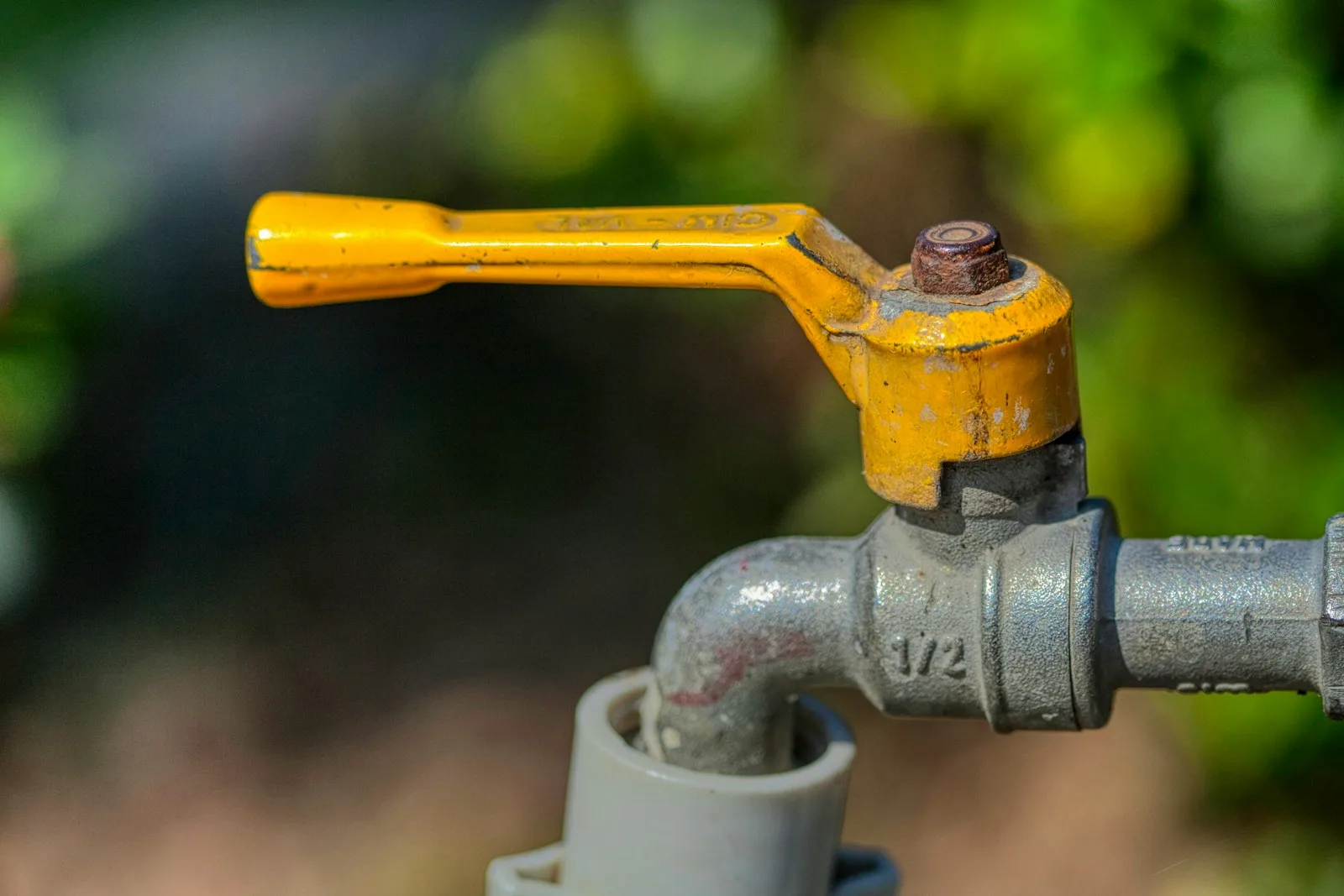
The valve you want is the one on the house side of the system. On most Miami-Dade single-family homes it sits where the supply comes up out of the ground at an exterior wall, and sometimes in a utility closet or the garage instead. It is usually a ball valve with a lever, and a quarter turn closes it. Leave the concrete meter box at the property line alone: the meter and its valve belong to Miami-Dade WASD and their personnel are the only ones authorized to operate them.
In a condo or an apartment, the unit shutoff is usually in the water heater closet or behind an access panel in a bathroom ceiling. If it isn't obvious, call building maintenance and have them close the riser: that's usually faster than searching. If the leak is at an appliance, the local valve behind the machine is enough. Whichever valve you use, photograph it once the emergency is over, so the next person in your household knows where it is.
Cut power to the affected rooms
Switch off the breakers serving those rooms rather than the whole house, so the refrigerator and the air conditioning keep running. Two hard limits: don't wade through standing water to reach a panel, and don't touch a panel that water has reached or that sits in the affected area. If either is true, stay out of the room, tell us on the phone, and we'll treat it as an electrical hazard until an electrician says otherwise. Nothing in the building is worth more than that.
Photograph everything before you move it
Four kinds of shot, in this order. A wide frame of each affected room from the doorway, so the extent is obvious. The source, whatever failed. Close shots of the wet edges: the baseboard line, the carpet, the cabinet toe kick, the ceiling stain, the water line on a wall. Then anything of real value that's sitting in it, one item per frame.
Lift what you can off the wet floor
Furniture legs off wet carpet, rugs rolled and moved to a dry room, boxes and paper up onto a table, art off wet walls, electronics unplugged and out. A square of foil or plastic under each furniture leg stops the finish bleeding into the carpet, which is a permanent stain that arrives within hours. Leave anything heavy or awkward where it is: a piano, a full bookcase, a stone-topped table. We bring people and equipment for that, and a back injury turns one problem into two.
Call, and describe the room
What tends to be saved, and what tends to come out
The valve is what decides this. Clean water and a fast stop, and most of a room is dried in place. The same volume left running for hours, and the arithmetic changes: paper-faced drywall wicks water upward against gravity, and every hour of contact moves the line higher up the wall.
Things that feel productive and aren't
Renting an extractor and calling it dry
Surface water is the visible part and the small part. What decides whether you get mold in two weeks is the water in the pad, the drywall, the cavity, and the framing, and no wet vacuum reaches any of it.
Opening walls yourself
Where drywall gets cut, and how high, is a decision made from readings. Cut in the wrong place and you've added a repair to the scope without removing any water, and there's wiring and plumbing in there.
Throwing things out before they're recorded
A ruined rug in a dumpster is an argument. The same rug photographed, listed, and then disposed of is a line item. Record it, then get rid of it.
Waiting for the adjuster before anything is touched
Turning the air conditioning off
Treating sewage like water
What people ask us next
Should I wait for my adjuster before anything is touched?
No. Most policies ask you to prevent further damage, and waiting works against you twice: the loss gets larger, and the carrier can ask why. Photograph the loss thoroughly, then let mitigation start. The photographs are what preserve the condition.
Is a burst pipe covered by homeowners insurance in Florida?
A sudden, accidental discharge is usually covered: a supply line that fails, a water heater that lets go, a washing machine hose that splits. Long-term seepage and deferred maintenance usually aren't. Coverage often turns on how well the first 48 hours were documented, and that part you and we can still affect.
How long does drying take after a water leak?
How long depends on what got wet and what the materials are, and the number is set by readings rather than by the calendar. We read the same points daily and the equipment stays until they reach dry standard: the moisture content of the same material in an unaffected part of the building.