
An AC condensate line backs up overnight, or a supply line under a sink finally gives out after years of slow corrosion. By morning, there’s water under the cabinets and nobody’s sure how far it traveled.
Miami’s humidity doesn’t give water damage much room for error. What might dry out on its own in a drier climate can sit, spread, and start feeding mold within a day or two here. This guide covers what causes water damage in Miami-Dade homes, how a professional response actually works, and what to expect from documentation through final drying.
Common Causes of Water Damage in Miami Homes
AC condensate line blockages are one of the most frequent culprits, especially with oversized systems that run constantly in Miami’s heat. Slab leaks show up often in older Miami-Dade homes, where aging supply lines run beneath the foundation. Pinhole leaks in copper supply lines, failed shower pans, and wind-driven rain through storm-created openings round out the list of everyday causes.
Many of these causes trace back to the age of the building. Homes and condos built decades ago often have the original supply lines still in place, and galvanized or early copper piping simply wasn’t built to last as long as the structures around it. A slab leak in one of these older properties can go undetected for weeks, since the water travels sideways through soil before it ever shows up as a wet spot on the floor above.
Clean Water vs. Contaminated Water
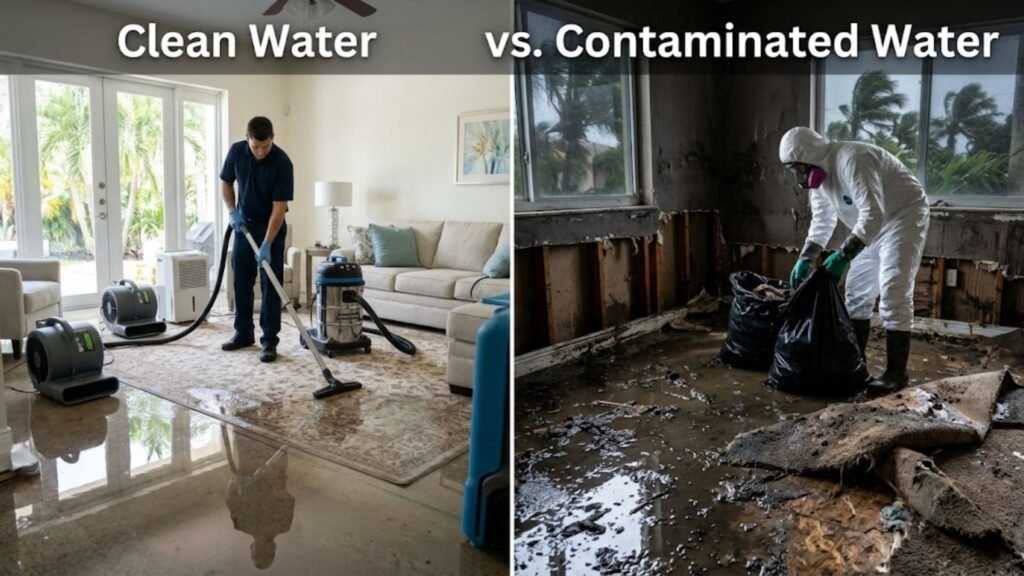
Not all water damage is treated the same way. Clean water from a supply line can often be dried in place once it’s extracted, without removing much material. Contaminated water, from sewage backups or groundwater intrusion, carries a different risk and typically requires removing affected materials and sealing off the room while the work is done. Knowing which category applies changes the entire scope of the job.
Our Water Damage Restoration Process
Water damage restoration follows a sequence built around measurement rather than guesswork:
- The call. We’re available 24/7 and walk you through shutting off the water source before anyone arrives.
- Inspection and moisture mapping. Thermal imaging and pin meter readings identify exactly where water traveled, including inside walls.
- Water extraction. Portable and weighted extraction equipment removes water mechanically from hard surfaces, carpet, and padding, since mechanical removal is always faster than letting it evaporate.
- Content protection. Furniture and belongings are moved out of the affected area and inventoried with photos.
- Controlled demolition. Only the materials that can’t be dried are removed. We don’t take out more than the moisture readings call for.
- Structural drying. Equipment is monitored daily and adjusted to the measured water volume in the space.
- Documentation. A complete report with photos and daily moisture readings goes to both the homeowner and the insurance adjuster.
Why We Follow the IICRC S500 Standard
Drying work follows the IICRC S500 standard, which means completion is determined by a moisture reading, not a calendar date. Every affected material has a target moisture level recorded on the first visit, and the job isn’t finished until the numbers confirm it, not before.
What to Do in the First Hour After a Leak
- Shut off the water source if you can safely reach it.
- Call for guidance before doing anything else. We can walk you through the next steps over the phone.
- Move furniture, electronics, and rugs away from standing water if it’s safe to do so.
- Take photos of the damage before anything is moved or cleaned, for your records.
Humidity and Mold Risk in Miami Homes
Miami-Dade’s average humidity runs around 74 percent, which means mold doesn’t need a dramatic flood to take hold, it can develop from condensation or a slow leak before anyone realizes there’s a plumbing problem at all. Wet drywall and wood left untreated can begin growing mold within 24 to 48 hours, which is a large part of why fast extraction and drying matter as much as the repair itself. If a water-damaged area already shows discoloration or a musty smell by the time help arrives, a separate mold remediation assessment is usually the next step.
Documentation for Your Insurance Claim
Florida law doesn’t allow post-loss insurance benefits to be assigned to a contractor, so we don’t bill your insurance company directly, the claim stays in your name from start to finish. What we do provide is thorough documentation: extent of damage, observed conditions, per-material moisture readings, equipment hours, and a written scope in the format carriers price from, with photographs attached to the relevant line items. Where possible, we aim to have someone present during your adjuster’s site visit to answer technical questions directly.
Why Choose DrySite Restoration
We serve Miami-Dade County exclusively rather than spreading across a wider territory, which keeps response times tight and the same technician involved from your first call through the final moisture reading. Our team is IICRC Certified, holds a Florida Mold Remediator license, and is licensed and insured, with 24/7 availability for water emergencies throughout Miami, Brickell, Wynwood, Coral Gables, Coconut Grove, Miami Beach, Aventura, Doral, Kendall, and the surrounding communities.
Frequently Asked Questions
How much does water damage restoration cost in Miami?
Cost depends on how much area was affected, whether the water was clean or contaminated, and how long it sat before extraction began. A moisture inspection gives a clearer picture before any work starts.
How long does structural drying take?
Drying is measured by moisture readings rather than a fixed timeline. Smaller, clean-water losses can dry in a few days, while larger or contaminated losses take longer, with daily monitoring until every material hits its target level.
Will DrySite bill my insurance company directly?
No. Florida law doesn’t allow post-loss benefits to be assigned to a contractor, so the claim stays in your name. We provide complete documentation so you can submit it to your carrier yourself.
Can I dry out a small leak myself?
A small, clean-water spill caught immediately can sometimes be managed with towels and a fan. Anything that has soaked into flooring, drywall, or cabinetry for more than a few hours is better handled with extraction equipment to prevent mold.
What's the difference between clean water and contaminated water damage?
Clean water, like a supply line leak, can often be dried in place. Contaminated water, from sewage or groundwater, requires removing affected materials and sealing the area, since it carries health risks that clean water doesn’t.
Do you serve areas outside Miami-Dade County?
No, we focus exclusively on Miami-Dade County so our team can maintain fast response times and consistent, direct oversight on every job.
Key Takeaways on Water Damage Restoration in Miami
Water damage rarely announces itself clearly in a humid climate like Miami’s. A slow AC condensate leak can do as much damage as a burst pipe if it goes unnoticed, and the materials that stay damp the longest are the ones most likely to need mold remediation next.
If your Miami-Dade home has standing water, a slab leak, or a leak you can’t locate, DrySite Restoration is available 24/7 to inspect, extract, and document the damage with the same team from the first call to the final reading. Call (305) FAST-DRY to reach our team.